
What is Good Sound?
The Art and Science of Good Sound
What makes it sound so good?
Audio engineering is equal parts art and science — precision, measurement, and judgment all working together to solve problems in real time. Here’s a practical, experienced look at what we do back there, what we’re adjusting and monitoring, and what those mysterious curves on the screen actually mean.
What we’re doing back there
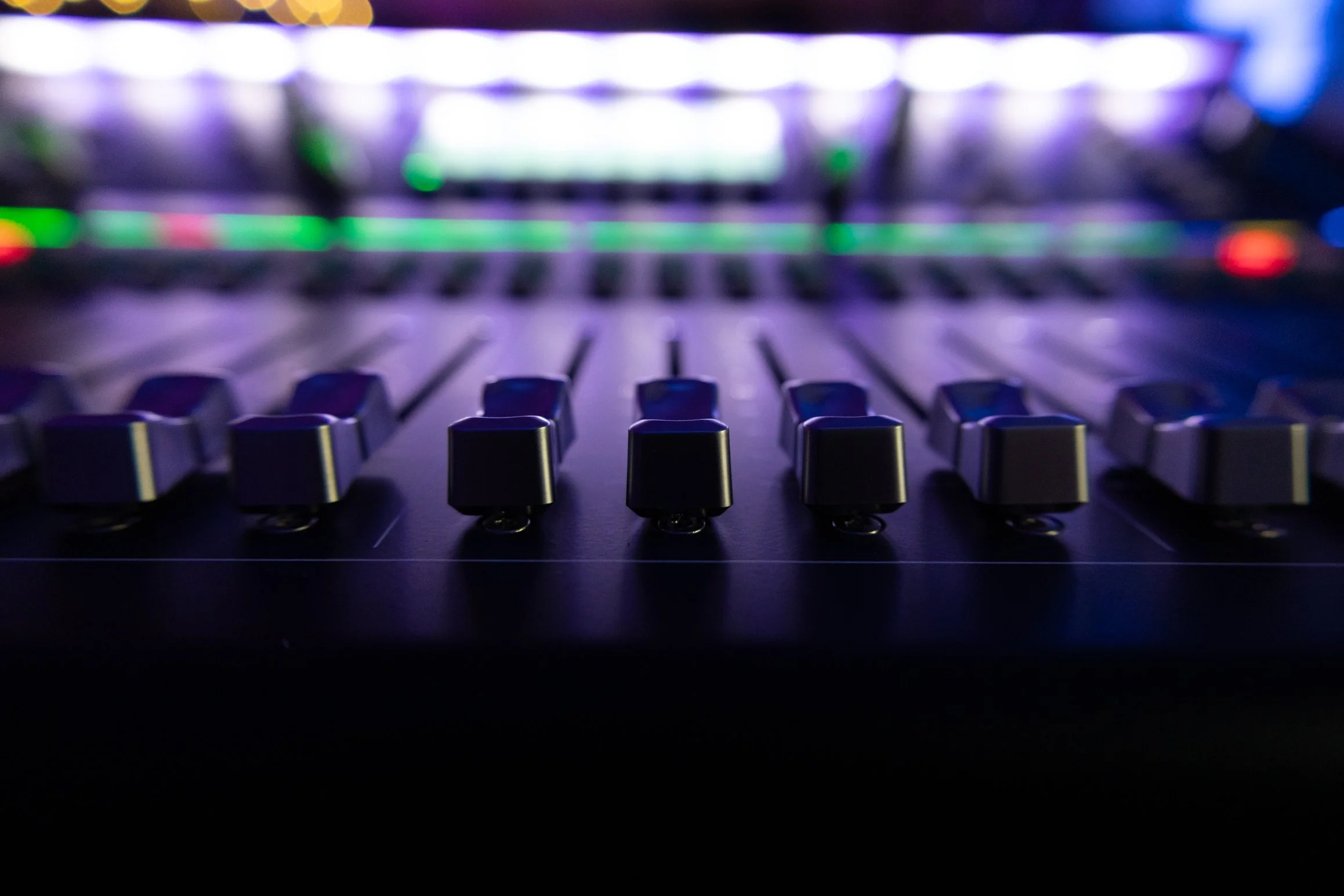
Balancing levels: The core job is making sure every source (vocals, instruments, playback tracks, mics on actors or speakers) sits at the right level relative to the rest. Too loud and it’s fatiguing or distorts; too quiet and it disappears. Balance is dynamic — I’m continuously riding faders to respond to peak vocal moments, drum hits, or a quiet solo.
Controlling tone: We shape the frequency content of sources so they’re clear and complementary. That means reducing muddiness, taming harshness, and giving a vocal the presence it needs to cut through a dense mix.
Managing dynamics: Compressors and limiters control how much a signal’s level varies. For live events, properly tuned dynamics processing keeps loud parts in check and quieter parts audible without sounding squashed.
Preventing feedback and interference: Feedback (that screeching loop between speaker and mic) is a constant threat. We set monitor levels, orient microphones, use equalization to notch problem frequencies, and sometimes switch mics or change placements mid-show to stop it.
Ensuring intelligibility: For spoken-word events — town halls, graduations, theater dialogue — clarity is everything. I focus on vocal clarity, room acoustics, speaker placement, and avoiding competing frequencies from music or ambient noise.
Adapting to the room: Different venues behave differently. A gym reflects low frequencies wildly; a black-box theater absorbs high frequencies. We tune systems on site so the room’s acoustics become part of the equation.
Monitoring system health: We watch meters, networked device status, amplifier temperatures, and wireless microphone battery levels. Preventative checks keep a performance running without interruption.
Creative effects and musical intent: Reverb, delay, modulation — these are used sparingly and with purpose to place a voice in the right acoustic space or to add texture for musical acts.
What we’re adjusting and tracking
Channel faders: The basic volume control for each input. I’m constantly moving these (often in small increments) to keep live balance as the performance changes.
Gain/trim: This is set at front-of-house and on stage box preamps to ensure adequate signal-to-noise ratio without clipping. It’s the first line of defense.
EQ (equalization): Parametric, graphic, or shelving EQs are used to cut or boost specific frequency bands. Typical adjustments: cut low-mids to reduce muddiness (around 200–500 Hz), add presence for vocals (2–5 kHz), and tame harshness (5–8 kHz).
High-pass filters (low-cut): Many channels, especially vocals, get a low-cut to remove rumble and stage noise below, say, 80–150 Hz — this clears up the low end and prevents excessive energy from mudding the mix.
Compression: Controls peaks and raises apparent loudness; used on vocals, bass, and overall mixes. Attack and release settings are tuned to musical or speech dynamics.
Gates and expanders: These reduce bleed from other stage sources into an open mic. Used on drum toms, guitar amps, or any noisy channel.
Sends and returns (auxiliary buses): Used to feed monitor mixes and effects. I’m adjusting how much reverb or delay a singer gets, or creating separate monitor mixes for musicians on stage.
Effects (reverb, delay, chorus): Tailored to the space and performance. Theatre or choir might need realistic hall reverbs; a pop vocal might get a short plate-style reverb and a slap delay for rhythmic impact.
Limiters and system EQ (PEQ): At the system level, limiters protect the speakers from excessive peaks. The system PEQ controls the loudspeaker’s voice so the overall output is safe and musical.
Delay alignment: For venues with multiple speaker clusters, we set time delays so sound from different stacks arrives at the listener in phase and on time. This avoids comb filtering and keeps the performance coherent across the audience.
Wireless mic management: Monitoring RF spectrum, switching frequencies when interference occurs, and watching battery levels are constant tasks.
What are all those waves and lights on the mixer?
All the tracking on an audio mixer—EQ curves, fader level meters, gain reduction and compressor meters, and channel activity LEDs—visually represent frequency adjustments, signal levels, dynamic control, and routing.
We watch them carefully to ensure clean, balanced sound: EQ curves show where to cut or boost frequencies to remove muddiness or feedback; level meters prevent clipping or distortion by keeping peaks below 0 dBFS (or the console’s red line); compressor/gain-reduction meters indicate how much dynamic control is being applied to maintain vocal clarity and punch; and channel/activity indicators help confirm signals are routed correctly and that no channels are muted or feeding back.
Monitoring these visuals in real time lets an engineer make fast, informed adjustments to protect equipment, preserve headroom, and deliver a consistent, high-quality mix.