
Stress Free Support
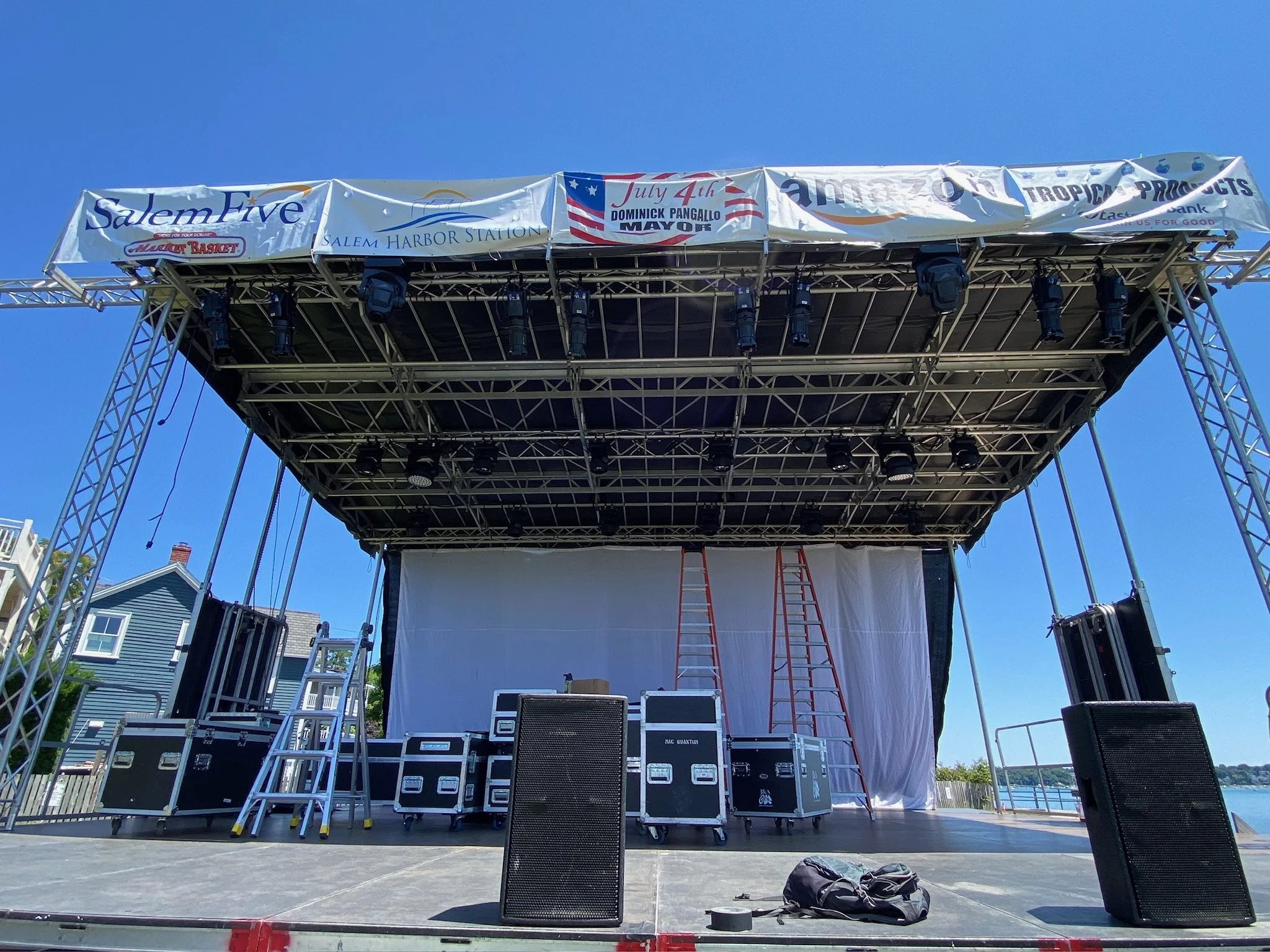
Let J&A help keep your event stress free so you can focus on what really matters - your special event!
How to find a reliable audio & lighting company in MA?
Finding a reliable audio and lighting company in Massachusetts means balancing technical skill, event experience, and clear communication. Use this checklist to evaluate potential vendors and choose one that will deliver flawless sound and the right atmosphere for your event.
Define your event needs
Event type and size: wedding, corporate event, concert, private party, festival. Different events require different rigs and crew sizes.
Venue specifics: indoor vs. outdoor, ceiling height, power availability, noise restrictions, and load-in access.
Services required: sound reinforcement, stage lighting, intelligent effects (moving lights, gobos), uplighting, wireless microphones, DJ services, live mixing, production management.
Budget range: have a realistic budget and know which elements are priorities.
Search locally and shortlist
Start local: search for companies that regularly work in MA venues (Boston, Worcester, Cape Cod, Merrimack Valley, Pioneer Valley). Local companies know venue rules, permit needs, and typical acoustics.
Look for recent, active portfolios: recent photos/videos of events similar to yours are most relevant.
Ask venues and event planners: venue managers, caterers, and wedding planners often have preferred vendors they trust.
Get at least 3 quotes to compare services and pricing.
Evaluate technical capability
Equipment quality: professional, well-maintained brands for speakers, mixers, microphones, amplifiers, and lighting fixtures. Ask for an equipment list.
System design: reputable companies design sound and lighting to the room, not just “bring speakers.” Ask how they plan speaker placement, delay fills, and lighting angles.
Technical staff: confirm experienced engineers and lighting designers will be present. For live music, a dedicated FOH (front-of-house) engineer is important.
Backup plans: ask about redundancy (backup mics, cables, spare fixtures) and contingency procedures for power or equipment failure.
Review experience and references
Event type experience: ensure the company has handled events like yours (e.g., live bands require different expertise than corporate AV).
Client references and reviews: request recent references or read third-party reviews. Focus on comments about punctuality, communication, and problem-solving.
Site visits and walk-throughs: a professional company will want to do (or request) a venue walk-through to plan rigging, sightlines, and power.
Communication and professionalism
Clear point of contact: you should have a dedicated production contact who answers questions and coordinates with your venue and other vendors.
Written proposals: get a detailed, itemized quote that lists equipment, crew hours, setup/strike times, travel fees, and any additional charges.
Contracts and policies: review cancellation, overtime, damage, and insurance policies. Confirm they carry general liability insurance and, if rigging is involved, appropriate rigging insurance and certified riggers.
Pricing and value
Itemized quotes: compare apples-to-apples. Low bids can mean hidden fees or underpowered equipment.
Overtime and scope changes: clarify hourly rates for staff and how scope changes are handled.
Value-adds: some companies include pre-event planning, sound checks, or basic lighting programming in the price.
Ask these specific questions
Have you worked at my venue before? Can you provide a contact at the venue?
Who will be on-site the day of the event (names and roles)? Will the same people who bid the job be present?
Can you provide an equipment list and line array/speaker layout for my event?
What time will you arrive for setup, and how long is setup/strike?
How do you handle sudden equipment failure or power loss?
What are your payment terms, cancellation policy, and insurance coverage?
Red flags
No written estimate or vague scope of work.
Unwillingness to visit the venue or provide references.
Equipment that looks outdated or poorly maintained in photos/videos.
Pushy sales tactics or pressure to sign immediately without clarifying details.
No clear point of contact or last-minute crew substitutions.
Final steps before hiring
Confirm date availability and reserve with a signed contract and deposit.
Schedule a planning meeting or tech call with your venue, entertainment, and vendor to align technical needs and timelines.
Provide a run-of-show and stage plot well before the event; ask the company for any inputs they need.
Request arrival/setup times and confirm parking/load-in logistics with the venue.
Choosing the right audio and lighting company in Massachusetts comes down to local experience, clear planning, respected equipment, and responsive communication. Prioritize companies that offer a venue-specific plan, experienced crew, solid references, and transparent contracts—those elements